
Superconductors
Energy In Society
Energy
Energy is a requirement for growth. As nature includes mechanisms that actively increase entropy, energy is most often a required input just maintain status quo. Our civilization has been shaped by the development of methods to extract energy from increasingly convenient and potent sources.
Currently, there is no more convenient method for the transmission and usage of energy than electricity. With increasing regularity most energy under human control will be converted into an electrical form for widespread usage. Consequently, technology that increases the efficiency of conversion, transmission, or application of energy will be beneficial to societal goals. There is a technology that has been demonstrated in laboratories for more than 100 years and excluding select use has yet to become widespread incorporated into society. Discovered in 1911, superconductivity holds the potential to introduce significant increases in efficiency and power density in electrical systems.
What Are Superconductors?
Energy → Superconductivity
Superconductors (SC) are materials that have the ability to conduct electricity without loss. These electrical conducting materials do not obey Kirchhoff’s laws of [Voltage = Current x Resistance]. The reason being an SC has no electrical resistance or on a materials level there is no drift velocity effect from the material lattice on the electrons to impede a moving current. A theoretical reason for such perfect conductance comes from electrons or other fermions travel through an SC by distorting the material lattice with what is known as a Cooper pair. The only resistive elements in an SC in the SC state are splices between SCs or connections to the SC. The net effect is still many orders of magnitude less resistance and hence a negligible current drop for an SC over a classical conductor.
The primary difficulty with SCs is that to date they only operate at very low, cryogenic, temperatures. A further known relationship is the higher the power or energy application, the lower the temperature operational requirement. On a microscopic scale this is due to the weak Cooper pairing force where a minimal amount of thermal agitation exceeding the low electron volts (eV) pairing energy will break the Cooper pair. On a macroscopic scale this temperature dependence leads to an SCs falling out of superconducting mode when they leave what is called the corner point bounded by what is known as the SC’s critical temperature, magnetic flux density, and current density as depicted in Figure 1. These interrelated values represent the temperature, magnetic, and current values that an SC must remain within else the SC phase of the material is lost. Therefore the SC must operate below these critical values at all times.
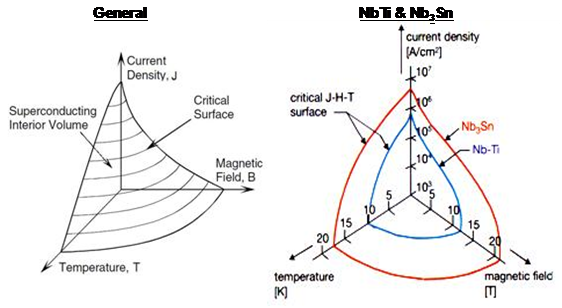
Figure 1: Superconductor Critical Value Corner Points
Further discussion of the critical values requires the introduction of superconductor classifications by material form and characteristic temperature. In the application world there are 4 overlapping classifications for SCs as listed in Table 1.